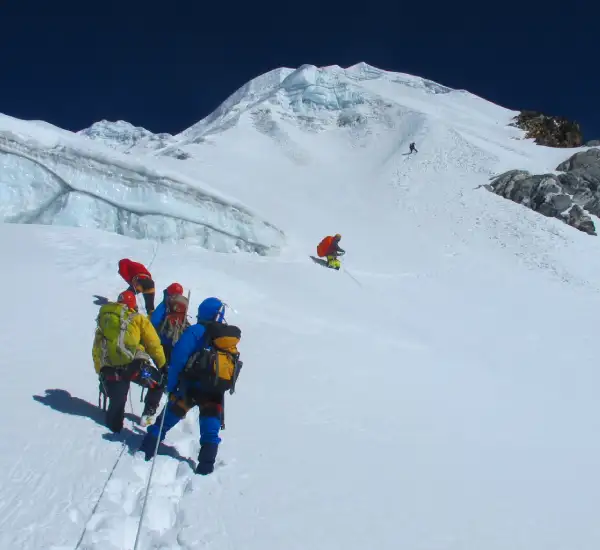
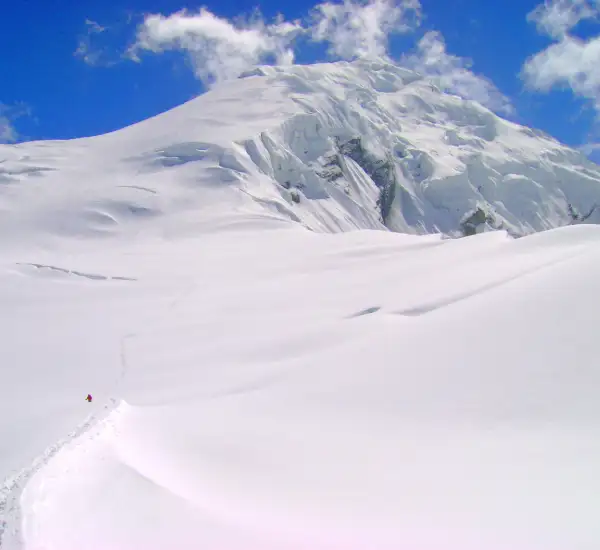
Island Peak, also known as Imja Tse, is one of the popular climbing destinations in the Everest region. It was first ascended in 1953 by a British expedition as part of their preparations for the historic Everest conquest by Sir Edmund Hillary and Tenzing Norgay. Since then, Island Peak has become the first choice for those who wish to conquer Everest and other highest mountains. Island Peak climbing expeditions can be introduced as a build-up training. Climbing Island Peak involves glacier travel, steep snow and ice slopes, and a technical ice wall. It requires proper ice climbing equipment, including crampons, ice axes, and ropes, making it suitable for experienced climbers with prior high-altitude experience.
The journey to Island Peak (Imja Tse) begins at Lukla. The trekking route passes through the picturesque Everest region, encompassing lush rhododendron forests, alpine meadows, and Sherpa villages. Namche Bazaar, Tyangboche, and Dingboche are popular Sherpa villages that offer opportunities to explore the local culture and Himalayan lifestyle. The terrain transitions from rugged trails to glacier travel as climbers ascend to the peak, characterized by steep snow and ice slopes and a challenging technical ice wall. The region is rich with iconic peaks like Everest, Ama Dablam, Pumori, Makalu, Nuptse, and Lhotse. Trekkers interact with friendly Sherpa communities, and accommodations range from teahouses to basic lodges. Proper logistics, including experienced guides and equipment, are essential for a successful ascent.
The nearest village from the Island Peak base camp is Chukung, which offers expedition logistics and provides all facilities like communications and tented equipment. The base camp is located at an altitude of 5,087 meters, on a flat area. At the base camp, we provide comfortable tented camping with hygienic meals. There are no camps above the base camp; climbers proceed directly from the base camp to the summit. However, we can set up a high camp depending on the client’s fitness level. The climb normally takes 9-12 hours from the base camp.
The best time for climbing Island Peak is during the spring and autumn seasons when the weather is stable, and the best views of majestic mountains can be observed. Our itinerary allows enough time for acclimatization. In any case where clients are not properly acclimatized, we stop for extra days to ensure better acclimatization before moving forward. Climbing with safety as our prime goal.
Day 1: Arrival in Kathmandu
Day 2: Kathmandu Sightseeing
Day 3: Fly to Lukla and Trek to Phakding (2860m)
Day 4: Trek to Namche Bazaar (3440m)
Day 5: Acclimatization Day in Namche Bazaar
Day 6: Trek to Tengboche (3870m)
Day 7: Trek to Dingboche (4410m)
Day 8: Acclimatization Day in Dingboche
Day 9: Trek to Chhukung
Day 10: Rest and Preparation Day in Chhukung
Day 11: Island Peak Base Camp
Day 12: Island Peak Summit (6189m) and Back to Chhukung
Day 13: Trek back to Pangboche
Day 14: Trek back to Namche Bazaar
Day 15: Trek back to Lukla
Day 16: Fly to Kathmandu
Day 17: Departure